Home > “JoMila” Iodine-rich plant-based milk alternatives – Healthy added value sustainably produced through the biofortification of oats
Recent studies indicate that large segments of the German population have an inadequate iodine intake. This is due to the declining use of iodized table salt and changes in dietary habits, such as the increasing trend toward avoiding foods of animal origin. Even a moderate iodine deficiency can have serious health consequences.
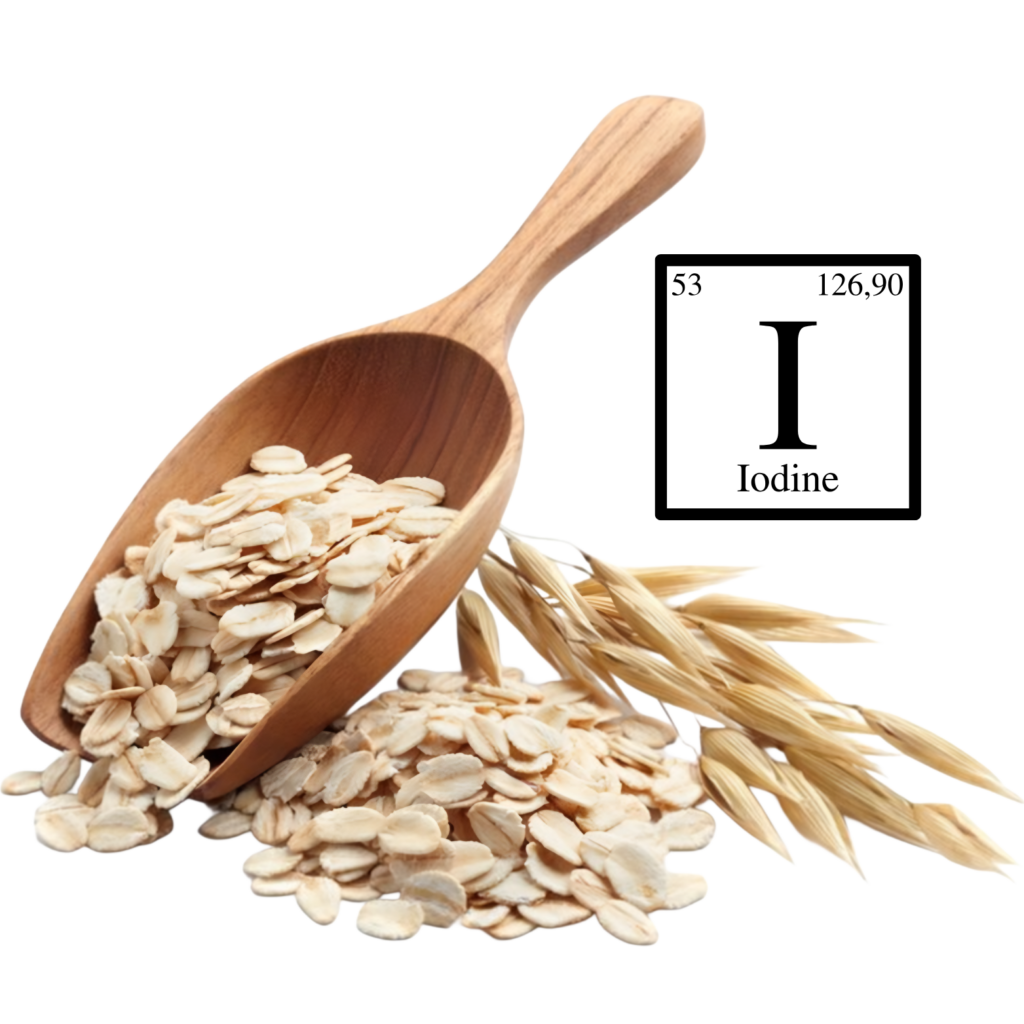
Against this backdrop, this subproject aims to develop a new approach to improving dietary iodine intake that effectively complements existing preventive measures. The focus is on oat-based plant-based milk alternatives, which are to be made comparable in iodine content to cow’s milk through agronomic biofortification. The methodological tools for this process technology are to be developed as part of the three-year research project in cooperation with Osnabrück University of Applied Sciences (HSOS), the German Institute of Food Technology (DIL), and associated partners from research and industry.
To this end, a series of field trials is planned over three growing seasons at the HSOS agricultural research station and on external trial plots to investigate the influence of various iodine fertilization strategies, site and weather conditions, and variety selection on the iodine content in oats. Furthermore, the study will examine the extent to which iodine biofortification can contribute to improving nitrogen use efficiency and the resilience
of oat plants to biotic stress
(infestation with fungal pathogens) and abiotic stress (drought).
The DIL is analyzing how the metabolome differs between iodine-biofortified and conventional oats. Of particular interest are changes in the levels of valuable components such as beta-glucans and proteins. To produce oat-based milk alternatives, the processing must be optimized so that as high a proportion as possible of the biofortified iodine from the grain and, if applicable, also from the hulls is utilized and retained during preservation via ultra-high-temperature treatment. To this end, corresponding pilot-scale trials are planned at the DIL. As part of a sustainable overall concept, suitable utilization options are also to be developed for by-products from plant production (iodine-rich oat straw) and from processing (hulls, processing residues).
The contact persons for this project are: Prof. Dr. Diemo Daum (D.Daum@hs-osnabrueck.de), Dr. Nino Terjung (n.terjung@dil-tec.de) and Franziska Witte (F.Witte@dil-ev.de)
Weitere Infos zum Projekt sind auch auf der Homepage der Hochschule Osnabrück is more critical than ever.