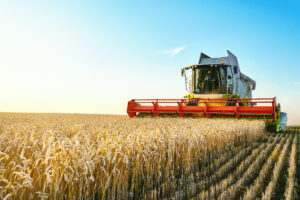
Based on long-term fertilization trials conducted on the University of Göttingen's experimental farms, adaptation strategies in crop rotation and fertilization are being investigated and translated into modeling approaches to enable the scaling of the trial results to a higher natural spatial scale. The changes in soil nutrient supply resulting from the restrictions of the fertilizer regulation and the associated changes in the composition of the food produced will also be examined in more detail. The consequences of climate change and extreme weather events will also be considered on a model basis.
Innovations in the field of Precision Farmingwhich have only become possible through the increased use of artificial intelligence, autonomous robotics, and machine learning, will be examined for their potential to mitigate the effects of production restrictions and in terms of consumer acceptance of products produced using regionally adapted arable farming strategies.

By 2050, 10 billion people will need to be fed, which will require an additional 250 million tons of protein per year. This initial project aims to overcome the challenges of extracting protein from grassland plants, especially from ryegrass. It aims to lay the necessary foundations for the sustainable use of grass protein in human nutrition and for use in the food industry to provide structure. The project at the German Institute of Food Technology (DIL) is investigating fundamental scientific questions for a process to extract techno-functional proteins from grassland plants. Four interdisciplinary sub-projects at the DIL are working together to analyze all process steps from the laboratory to the pilot plant level.
Particular attention is being paid to protein yield and quality, economic efficiency, and a positive life cycle assessment. Food chemists, laboratory assistants, technologists, and technicians are coordinating the experiments and analysesin order to thoroughly investigate and optimize each step from extraction to the use of grass protein in functional foods.

Nettles offer enormous potential as a sustainable source of protein, but their industrial use has not yet been sufficiently researched .However, their industrial applications have not yet been sufficiently researched. Protein extraction , in particular, poses a technological challenge , as there are no established extraction methods and due to the high levels of polyphenols and antinutritional substances.
Protein extraction in particular poses a technological challenge, as there are no established extraction methods and due to the high content of polyphenols and antinutritional substances. This research project is developing a scalable, sustainable process for extracting protein from nettles.The yield and quality of the nettle protein is to be optimized by integrating modern separation and stabilization technologies, such as pretreatment with pulsed electric fields (PEF) and innovative extraction and separation techniques.
Particular attention is being paid to the complete utilization of the plant. By-products such as press cake, separation residues, and fibers are integrated into closed-loop systems to ensure maximum resource utilization.
The project builds on previous findings on protein extraction from grass from current research work in the ZERN network, in particular the initial project on „grassland use and protein extraction from grass“ which pursues similar goals in the field of protein extraction.
 Permanent grassland is important for soil and water protection and, as a carbon sink, makes an important contribution to climate protection. In the field of grassland use, a project at the German Institute for Food Technology (DIL) is investigating fundamental scientific questions for a process for extracting techno-functional proteins from grassland plants. In addition to the protein-rich pressed juice, a relatively dry press residue is produced, for which it is necessary to find ways of utilization that add as much value as possible.
This is where the Presswert project comes in. It complements the DIL project by using the press residues produced there in a high-quality material application for the extraction of fibers for paper production and hydrogels. The project is being carried out in close cooperation between the two Thünen Institutes for Agricultural Technology and Wood Research. In addition to the DIL, GeCo GbR and the Klingele paper factory are also involved as associated partners.
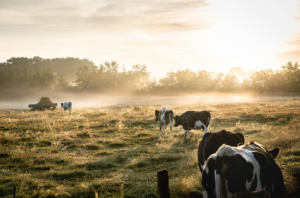 In light of the worsening climate crisis, the dairy sector plays a crucial role in reducing greenhouse gas emissions. However, reducing greenhouse gases is complex in this area. The livestock sector is a major contributor to greenhouse gas emissions and significantly contributes to agriculture's impact on the climate. In Germany, agriculture is responsible for 8% of national greenhouse gas emissions, with 42% attributable to livestock farming (BMEL, 2024). In addition, the agricultural sector causes 75% of national methane emissions, which are mainly produced by the digestive processes of cattle. Lower Saxony, a region with intensive livestock farming, produces 22.4% of Germany's milk (BZL, 2024), highlighting the central role of the dairy sector in the state's emissions profile.
This project focuses on strategies for reducing greenhouse gases in Lower Saxony's dairy sector and aims to provide farmers with information and solutions to support climate-friendly practices in the region. Suitable climate protection measures that farmers are both willing and able to implement are analyzed and then communicated to farmers using appropriate information strategies. The goal of the project is to link research findings with concrete, agriculture-related practices that bring economic, ecological, and social benefits. Through systematic evaluation, co-design, and communication of climate protection measures, we want to equip dairy farmers with the knowledge and tools they need to contribute to climate goals while improving the sustainability of their farms.
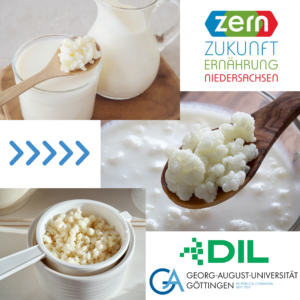
The origin of kefir has not yet been conclusively proven.
However, it is certain that kefir was already being produced 3,500 years ago in what is now China. In 2024, a team of researchers led by Yichen Liu published their latest findings in the journal Cell: it appears that the bacterial strains still used today originated not only in the North Caucasus, but also in Tibet Volume 187, Issue 21, 17 October 2024, Pages 5891-5900.e8 https://doi.org/10.1016/j.cell.2024.08.008).
Kefir is also known as the “drink of centenarians.”
A millennia-old drink in a current research project in Lower Saxony?
That's right! At the ZERN network, we are analyzing kefir from a wide variety of perspectives: from product quality and intervention studies to digestion in artificial intestines and the potential for small to medium-sized dairy farms.
“The kefir project gives us the exciting task of bringing these different perspectives together to understand the full potential of kefir. A millennia-old product understood in a new way: healthy, nutritious, and regional,” is how Dr. Johanna Mörlein describes the work ahead.
The contact person for this project is Dr. Johanna Mörlein (johanna.moerlein@uni-goettingen.de)
...further information to follow...
 The contact persons for this project are:
PD Dr. habil. Jochen Schulz (Jochen.Schulz@tiho-hannover.de) and Prof. Dr.-Ing. Markus Richter (m.richter@ift.uni-hannover.de)
...further information to follow...
As part of the ZERN network's outreach projects, innovative approaches to science communication
in the field of nutrition and consumer behavior are to be tested.
The basis for this is formed by three online surveys on current food trends – non-alcoholic beverages (e.g., non-alcoholic beer, wine, etc.), high-protein products, and dietary supplements. The project is supplemented by an experimental pilot study on the practical use of alternative protein sources in the teaching kitchen (Göttingen).
The aim is to develop and implement target group-oriented communication strategies for the TikTok platform. This should contribute to evidence-based and low-threshold consumer information in the digital space while increasing the visibility of the ZERN network.
Planned measures
1.) Conducting three online surveys (approx. 1,000 people each, representative of the population in terms of age and gender)
Topics
- Consumption and attitude patterns toward non-alcoholic beer
- Perception and use of high-protein products
- Knowledge, trust, and motives for use in relation to dietary supplements
Objective: To generate evidence-based insights into the relevance and perception of these trends among various target groups (especially 18–35 year olds).
2.) Pilot study with qualitative data collection: Use of alternative protein sources in the teaching kitchen
Objective: Practical test of the acceptance and preparability of plant-based or alternative proteins (e.g., legumes, fermentation products) with students.
- Recording sensory, practical, and communicative aspects
- Observation of reactions, feedback, spontaneous language (“What goes down well?”)
- Utilization of content as narrative and visual source material for TikTok
3.) Derivation and testing of a TikTok communication strategy
Based on the survey results, a storytelling and format concept will be developed that presents evidence-based content in a visually and narratively appealing way for TikTok. Reach, engagement, and reception in the target group will be evaluated iteratively.
The contact persons for this project are Dr. Clara Mehlhose (clara.mehlhose@uni-goettingen.de) and Dr. Sophie-Dorothe Lieke (sophiedorothe.lieke@uni-goettingen.de)
 The project “Hidden Peatential! – We Need Pea Counters Here” aims to
convey scientifically sound knowledge about sustainable nutrition and alternative protein sources—particularly those based on peas—in a practical and socially relevant way.The focus is on the newly established Citizen Lab as an outreach format that specifically uses public spaces such as pedestrian zones to bring science directly into the everyday lives of citizens.
Through an interactive, low-barrier approach, passersby are invited to explore plant-based protein sources through tastings, hands-on experiments, and **conversations with scientists**. Citizen Lab 2.0 targets people outside of formal educational settings and aims to encourage thoughtful decisions regarding nutrition and sustainability in a playful and informative way—without judging or preaching.
Planned measures
During the project period, two Citizen Lab 2.0 events are to be held at high-traffic public locations in Osnabrück and Quakenbrück (e.g., downtown). The goal is to engage approximately 100 citizens at each event in an accessible and direct way with scientific content on sustainable food systems. The following activities are planned:
• Tasting stations: Comparison of plant-based and animal-based products for sensory evaluation; participants assess the taste, texture, and acceptability of different protein sources.
• Simple hands-on and evaluation experiments on plant-based proteins:
o Foam formation with legumes (aquafaba): Whipping chickpea water demonstrates the techno-functional properties of plant-based proteins compared to animal-based alternatives.
o Amino Acid Puzzle: A memory or puzzle game demonstrates in a fun way how
combining different plant-based sources (e.g., peas and grains) can result in a complete amino acid profile.
• Dialogue formats with researchers: Informal discussions about the environmental impact of various protein sources (e.g., carbon footprint, water consumption, land use) encourage informed reflection on diet and sustainability.
• Evaluation: Brief on-site surveys and structured observations capture the format’s impact, reach, and potential for improvement.
The contact persons for this project are: Prof. Simone Lipinski (S.Lipinski@dil-ev.de), Prof. Marco Beeken (marco.beeken@uni-osnabrueck.de), Dr. Lars Otte (lars.otte@uni-osnabrueck.de)
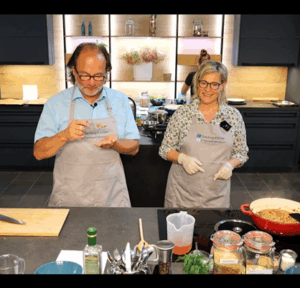
Through a regular digital communication series titled “ZERN Science Talk: Live from the Teaching Kitchen,” which is an evolution of the “Culinary Future Talks” organized by the ZERN network which took place on three Thursdays in September 2024, the Lower Saxony’s research landscape, which raises the profile of companies in the agriculture and food industry as well as other stakeholders and institutions in this field, connects them, and introduces them to an increasingly broad audience. The focus is on the ZERN network itself, its partners, and its ongoing projects, activities, and results. In this way, the initiative also contributes to the three other sub-goals of the ZERN network, as it involves stakeholders from agricultural production, processing, and marketing, as well as those working at the interface with consumers, to present their perspectives, research, or solutions—such as products or innovative production methods—during the Future Talks. The project thus facilitates active networking within the industry and highlights points of intersection and opportunities for cooperation.
In doing so, it makes a significant contribution to fostering collaboration between academia, industry, and consumers, and strengthens the long-term viability of Lower Saxony’s food industry, which is the state’s second-largest economic sector after the automotive industry. A total of 8 ZERN Future Talks are planned, to be held on a monthly basis, on the first Thursday of every month, and which are broadcast live from the Teaching Kitchen at the Jahnstadion Sports Park in Göttingen.
The The Teaching Kitchen will be converted into a television studio for this purposewhich is optimally equipped for live webinars. Three different camera angles (kitchen view/wide shot, stovetop, cutting board) can be used professionally.
The Teaching Kitchen at the Jahnstadion Sports Park is operated by our partner, Culinary Medicine Deutschland e.V.
genutzt werden. Das Teaching Kitchen im Sportpark Jahnstadion wird von unserem Kooperationspartner Culinary Medicine Deutschland e.V. betrieben.
In each of the 8 sessions of the ZERN Future Talk, (at least) A guest with expertise in the field was invited to the Teaching Kitchen. Recipes that align with the guest’s area of expertise are selected and prepared in advance in consultation with the guest. During the event, these recipes are prepared live on camera together with the guest. Meanwhile, an engaging conversation takes place between the guest and the hosts, covering both the guest’s professional perspective and a culinary discussion about the recipes, as well as tips and tricks in the kitchen. Viewers of the ZERN Future Talks can ask questions via the chat function.
Bringing together science, business, the consumer perspective, and culinary arts in an interactive “live cooking show” creates an engaging communication format that appeals to many stakeholders as well as interested consumers.
The contact persons for this project are: PD Dr. Thomas Ellrott (thomas.ellrott@med.uni-goettingen.de) and Nicola Rosenau (nicola.rosenau@med.uni-goettingen.de)
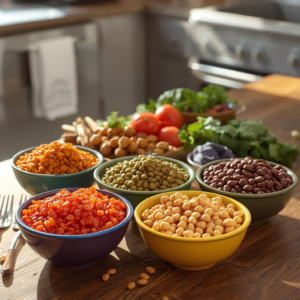 National and international agricultural and food policy initiatives aim to increase the proportion of plant-based protein sources in the diet.. Legumes are a key component of thisLegumes are a key component of this, as they are rich in plant protein and offer health and environmental benefits compared to animal protein. However, there is a significant discrepancybetween actual consumption and the consumption levels recommended by key nutrition organizations. In order to promote this transformation towards a more legume-based diet, the planned research project aims to identify potential dietary pathways through which consumers can make the transition from a diet based primarily on animal protein to one based more heavily on legumes..
To achieve this goal, a 36-month project duration with five work packages is planned.
In the first work package a systematic literature review will be conducted to review the current state of research on consumption patterns and preferences in the area of plant-based protein sources. The aim is to identify key findings and existing research gaps.
The second work package comprises two empirical online studies, each with n=1000 respondents. The first study will take stock of current legume consumption. At the same time, relevant target groups will be identified.
As part of the third work package, longitudinal scanner data from research partner Edeka will be analyzed to understand purchasing decision-making processes for legumes. The first subproject will examine the extent to which initial purchases develop into repeat purchases and ultimately into habitual consumption. The second subproject will also analyze the role played by sustainability features (e.g., organic labels) and price promotions. The results from work packages 1 to 3 will be brought together in an integrative synthesis (WP4).
The aim is to develop evidence-based recommendations for action and strategies to promote legume consumption.
The fifth work package covers organizational project coordination and science communication measures for knowledge transfer in practice and science. Due to its mix of methods, including the use of extensive, up-to-date scanner data from Edeka, the project goes beyond the current state of research and promises innovative and practice-relevant results for an important consumer sector.
Contact persons for this project are: Dr. Kristin Jürkenbeck (kristin.juerkenbeck@uni-goettingen.de) and Jun. Prof. Dr. Maureen Schulze (maureen.schulze@leuphana.de)
...further information to follow...
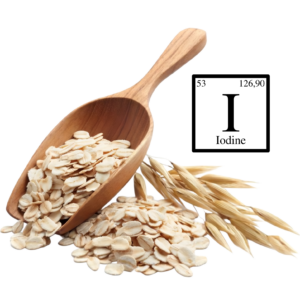 Recent studies indicate that large segments of the German population have an inadequate iodine intake. This is due to the declining use of iodized table salt and changes in dietary habits, such as the increasing trend toward avoiding foods of animal origin. Even a moderate iodine deficiency can have serious health consequences.
Against this backdrop, this subproject aims to develop a new approach to improving dietary iodine intake that effectively complements existing preventive measures. The focus is on oat-based plant-based milk alternatives, which are to be made comparable in iodine content to cow’s milk through agronomic biofortification. The methodological tools for this process technology are to be developed as part of the three-year research project in cooperation with Osnabrück University of Applied Sciences (HSOS), the German Institute of Food Technology (DIL), and associated partners from research and industry.
To this end, a series of field trials is planned over three growing seasons at the HSOS agricultural research station and on external trial plots to investigate the influence of various iodine fertilization strategies, site and weather conditions, and variety selection on the iodine content in oats. Furthermore, the study will examine the extent to which iodine biofortification can contribute to improving nitrogen use efficiency and the resilience
of oat plants to biotic stress
(infestation with fungal pathogens) and abiotic stress (drought).
The DIL is analyzing how the metabolome differs between iodine-biofortified and conventional oats. Of particular interest are changes in the levels of valuable components such as beta-glucans and proteins. To produce oat-based milk alternatives, the processing must be optimized so that as high a proportion as possible of the biofortified iodine from the grain and, if applicable, also from the hulls is utilized and retained during preservation via ultra-high-temperature treatment. To this end, corresponding pilot-scale trials are planned at the DIL. As part of a sustainable overall concept, suitable utilization options are also to be developed for by-products from plant production (iodine-rich oat straw) and from processing (hulls, processing residues).
The contact persons for this project are: Prof. Dr. Diemo Daum (D.Daum@hs-osnabrueck.de), Dr. Nino Terjung (n.terjung@dil-tec.de) and Franziska Witte (F.Witte@dil-ev.de)
Weitere Infos zu dem Projekt sind auch auf der Homepage der Hochschule Osnabrück is more critical than ever.
 LeGreNi aims to provide a comprehensive overview of the food system in Lower Saxony and to develop concrete recommendations for action toward a sustainable transformation in line with the"One Health"appraoch. At its core is the development of a network- or graph-based data structurethat integrates stakeholders, processes, and resource flows from primary agricultural production all the way to points of consumption such as institutional kitchens or food banks.
This makes complex interdependencies along the value chains visible and allows them to be systematically analyzed. Methodologically, Graph Neural Networks (GNN) are used in particular. These AI methods make it possible to identify patterns in highly complex networks and perform scenario simulations. Unlike traditional black-
box algorithms, they provide transparent results—a decisive advantage for collaboration with academia, policymakers, and industry. This approach is complemented by traditional modeling methods such as life cycle assessments and cost-benefit scenarios. The added value of the project lies in identifying interface problems and inefficiencies in distribution. This allows for targeted improvements in resource flows and contributes to a sustainable food system.
The following socially relevant key questions are addressed as examples:
LeGreNi combines expertise in agricultural science and nutrition with expertise in applied computer science, thereby contributing to the ZERN agenda: supporting agriculture within functioning ecosystems, considering the regional food economy within a global context, and making food systems sustainable for the future.
The expected outcomes include a digital model of Lower Saxony’s food system, along with scenario analyses and recommendations for policy and practice. In this way, LeGreNi provides both application-oriented basic research and knowledge transfer tools in Lower Saxony. This draws on a broad network of research partners, including practice partners such as the Studentenwerk OS, Göttingen’s catering services, Lower Saxony’s food banks (including logistics centers), as well as information from food safety authorities, veterinary medicine, the chambers of agriculture, and other stakeholders.
The contact persons for this subproject are: Prof. Dr. Melanie Speck (m.speck@hs-osnabrueck.de), Prof. Dr. Martin Atzmüller (martin.atzmueller@uos.de), Prof. Dr. Antje Risius (a.risius@uni-goettingen.de), Prof. Dr. Stefan Stiene (s.stiene@hs-osnabrueck.de)
...further information to follow...
 Today’s diet is characterized by low consumption of whole grains, fruits, and vegetables, coupled with high consumption of highly processed foods and meat.Today’s diet is characterized by low consumption of whole grains, fruits, and vegetables, coupled with high consumption of highly processed foods and meat, which is harmful to both public health and the environment. Strategies that rely on willpower overlook the powerful influence of the food environment, which is crucial for transitioning to thePlanetary Health Diet. Institutional food service, particularly in university cafeterias, proves to be an effective structural lever, as management decisions by a small number of stakeholders can influence a large group of people more effectively than changes at the household level.
The transition to college marks an important stage in life. Students gain more independence but face constraints in terms of time, budget, and cooking skills, which often leads to poorer dietary quality. University cafeterias offer affordable, socially integrated meals and are thus an important setting where early habits are formed. However, research on how students’ dietary habits develop and how institutional environments influence them is still in its infancy,including in Lower Saxony.
Existing research findings are often outdated, cross-sectional, and lack an integration of purchase data and surveys. The StuDiet project addresses these gaps by collecting longitudinal data on the dietary habits of first-year students at two universities. It integrates survey data, cafeteria sales figures, and qualitative insights to understand how personal and institutional dietary environments interact with one another.The project is divided into the following work packages:
(1) Panel surveys to track changes in dietary patterns and identify at-risk subgroups;
(2) qualitative analyses of the dietary habits of student households, including food preparation and food waste;
(3) advanced analyses that link surveys with cafeteria purchase data, develop predictive models, and create a prototype recommendation system to promote healthier choices;
(4) a summary of actionable recommendations.
Through an initial triangulated analysis of quantitative and qualitative data, the project will compile and jointly develop data-driven measures such as nudges, menu redesigns, and policy briefs for institutional caterers. The results will not only be incorporated into university dining services in Lower Saxony but can also be adapted and applied to similar institutions throughout the state.
The contact persons for this subproject are: Prof. Dr. Achim Spiller (a.spiller@agr.uni-goettingen.de), Dr. Clara
Mehlhose (clara.mehlhose@uni-goettingen.de), Dr. Sophie-Dorothe Lieke (sophiedorothe.lieke@uni-goettingen.de)
...further information to follow...
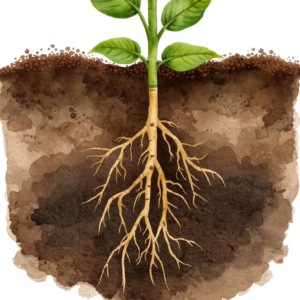 Agriculture in Lower Saxony is facing a variety of changes,including water shortages caused by climate change, rising fertilizer costs, and societal demands for reduced environmental impact. Various adaptation measures could help address these challenges. For example,
(i) Deep-rooted legumes provide nitrogen at low cost and improve soil structure,
(ii) Reduced tillage can help adapt to water scarcity and
(iii) Increased incorporation of organic matter can improve nutrient availability and topsoil structure.
The effectiveness of such measures and their combination depends on local site conditions. It is therefore necessary to test their performance under limited nutrient and water supply in representative agricultural conditions in Lower Saxony.
This subproject will therefore investigate the effects of a mixture of deep-rooted plants and legumes used as cover crops in an existing sugar beet crop rotation trial will be studied. In addition, drought stress conditions will be simulated by setting up so-called “rain-out shelters.” An interdisciplinary team of soil physicists, soil chemists, and agricultural scientists will work together on the analysis.
Findings regarding the effects on soil structure, the water balance, the dynamics of organic carbon and nitrogen in the soil, sugar beet root growth, and the agronomic crop rotation balance will be presented at the end of the project. In addition, the project will complement ongoing ZERN studies.This includes a long-term fertilization trial that examines the effects of different crop residue management practices on nutrient dynamics and is used to develop strategies for adjusting management practices. In addition, an ongoing experiment on reduced tillage is being supplemented by drone-based infrared imaging to measure drought stress in crops.
In addition, remote sensing experts will work on analyzing hyperspectral data from drones and satellites to enable ground monitoring at the field to regional level.
Once these newly available methods have been developed and calibrated for local conditions, the impacts of the tested adaptation measures will be assessed at the landscape level in Lower Saxony.
The contact persons for this subproject are: Prof. Dr. Stephan Peth (peth@ifbk.uni-hannover.de), Prof. Dr. Sabine Chabrillat (chabrillat@ifbk.uni-hannover.de), Prof. Dr. Georg Guggenberger (guggenberger@ifbk.uni-hannover.de), PD Dr. Anna Jacobs (jacobs@ifz-goettingen.de) and Prof. Dr. Anne-Katrin Mahlein (mahlein@ifz-goettingen.de)
...further information to follow...